
Speakers

Michael West

Looking Up for a Living: Stories from Chile, Hawaii, and the Edge of Space

Wednesday, Oct 21, 2:00 PM – 3:00 PM
Meijer Theater – Grand Rapids Public Museum
Live Stream

Over four decades, Dr. West has explored the universe on its grandest scales, mapping vast cosmic structures and studying cannibal galaxies. He has worked with some of the world’s largest telescopes, both on the ground and in space, including the Hubble Space Telescope. For the past decade, he was part of a team at Lowell Observatory that brought science, education, and public outreach together. In this talk, Dr. West shares career highlights and personal stories, including how Carl Sagan helped inspire his lifelong passion for astronomy.

About Dr. Michael West

Michael West, PhD (Yale University, 1987) has nearly thirty years of experience as a professional astronomer, many of them spent abroad. He held research, teaching and management positions in Canada, Chile, the Gambia (western Africa) and the Netherlands, as well as the United States. As ESO’s Head of Science in Chile for six years,  West supervised an international staff of astronomers, postdocs and students comprised of more than two-dozen different nationalities. As a Professor of Astronomy at the University of Hawaii, West was actively involved with the international community of observatories on Mauna Kea, including authoring a new book titled A Sky Wonderful with Stars: 50 Years of Modern Astronomy on Maunakea, published in 2015.

Picture of Dr. Deana Weibel, invited speaker to the 2026 GLPA Conference

Deana Weibel

The Ultraview Effect: Awe, Humility, and Exploring the Unknown

Thursday, Oct 22, 4:00 PM – 5:00 PM
Meijer Theater – Grand Rapids Public Museum
Live Stream

The ultraview effect refers to a pattern observed when ordinary ways of understanding the universe collapse. While many astronauts describe the well-known overview effect when viewing Earth from space, some others report a very different experience when they turn outward toward the stars. Looking into deep space from space may produce a profound sense of disorientation, cognitive overload, or uncertainty in the face of vastness.

About Dr. Deana Weibel

Deana Weibel, PhD (UC San Diego, 2001) is a cultural anthropologist whose work focuses primarily on religion, especially the topics of pilgrimage, sacred space, the mutual influence of scientific and religious ideas on each other, and religion and space exploration. Her early fieldwork took place in France at pilgrimage sites like Rocamadour and Montségur. She has also conducted research at the pilgrimage center of Chimayó, New Mexico. More recent work focuses on religion as a motivation for and influence on space travel and outer space-based sciences, with field visits taking place at “space sites” throughout the U.S., including the Johnson and Kennedy Space Centers, the Mojave Air and Spaceport, the Jet Propulsion Laboratory, the JHU Applied Physics Lab, and Spaceport America. Weibel spent a month in 2019 at the Vatican Observatory, studying “the Pope’s Astronomers.” She has also studied the history of anthropology, particularly the overlap of her own family’s role and the role of anthropology in the exhibition of Philippine Igorot people in fairs and expositions during the early 1900s. She is the co-founder and co-organizer of Roger That! A Celebration of Space Exploration in Honor of Roger B. Chaffee, a two-day conference that has been an annual Grand Rapids, Michigan event since 2017. She served as chair for GVSU’s Anthropology Department from 2012-2018 and as interim chair for GVSU’s Interdisciplinary, Religious, and Intercultural Studies Department from 2021-2022.
Dr. Shannon Schmoll

Astronomy Update

Friday, Oct 25, 2:00 PM – 3:00 PM
Meijer Theater – Grand Rapids Public Museum
Live Stream

This annual talk takes a look at astronomical discoveries in the past year that made it to the news. It takes a deeper dive into a few stories to look at how the discoveries were made and why they are important. This year, the talk will include planetarium visualizations as well.

About Dr. Shannon Schmoll

Dr. Shannon Schmoll is the director of the Abrams Planetarium at Michigan State University where she has been working to expand both astronomy programming and learning of other subjects under the dome.

She earned a joint PhD in Astronomy and Astrophysics and Education from the University of Michigan in 2013. Her research has focused on extending learning beyond the dome planetarium shows. She was a member of the first cohorts of the Astronomy in Chile Educator Ambassadors program and of Mission Patagonia to learn about major observatories and conservation efforts in Chile, respectively. She currently serves as president-elect of the International Planetarium Society where her goals include building capacity for planetarium education research.

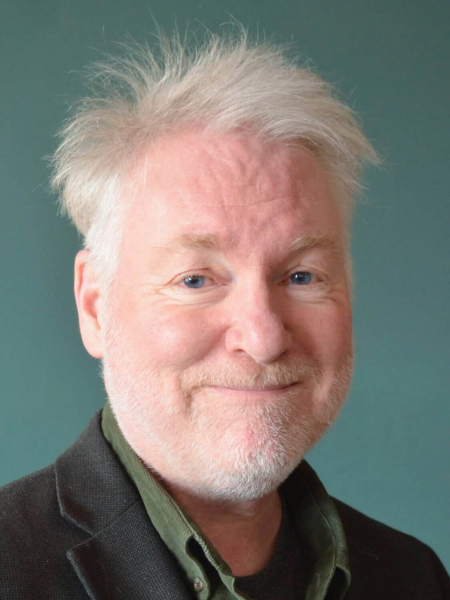
Image of a man, smiling at the viewer

Geoff Holt

Spitz Lecture - To Be Taught, If Fortunate

Friday, Oct 25, 7:45 PM – 8:45 PM
Meijer Theater – Grand Rapids Public Museum
Live Stream

Named after planetarium pioneer Armand N. Spitz, the lecture honors our progress and challenges us to push the limits of what the Planetarium can be.

About Geoff Holt

Geoff began planetarium work as a middle school science teacher in a school district which had three Starlab mobile planetariums. This led him to pursue his first master’s degree at the University of North Carolina at Chapel Hill while serving as an intern at the Morehead Planetarium. Moving back to his home state of Wisconsin, Geoff served as the planetarium director of the Madison Metropolitan School District for twenty-eight years. He now enjoys his retirement roles as a grandfather, emergency medical technician, firefighter, and co-facilitator of a master’s degree program focused on experiential education.

Great Lakes Planetarium Association
Privacy Overview

This website uses cookies so that we can provide you with the best user experience possible. Cookie information is stored in your browser and performs functions such as recognising you when you return to our website and helping our team to understand which sections of the website you find most interesting and useful.